You apply to roles you are qualified for, and then you hear nothing. It can feel personal, but most of the time it is not a human decision at all. Many employers use an applicant tracking system (ATS) to filter CVs before a recruiter ever sees them. If your CV does not pass the ATS stage, your application stops there.

This guide explains what an ATS does, why it rejects CVs, and how to reduce the chances of being filtered out. The goal is not to game the system. It is to make sure your CV is readable, relevant, and easy for both software and people to understand.
What an ATS actually does (simple explanation)

An ATS is software that collects applications, organizes them, and helps employers review candidates. Some ATS tools score CVs against the job description. Others simply parse your CV into fields so a recruiter can search and filter.
Think of it as a parser and a filter. It reads your file, extracts your experience and skills, and compares them to the role. If it cannot read the file or find enough relevant signals, your CV can be downgraded or excluded before a human ever sees it.
5 real reasons ATS rejects CVs
ATS rejections usually happen for practical, fixable reasons. Here are the most common ones.
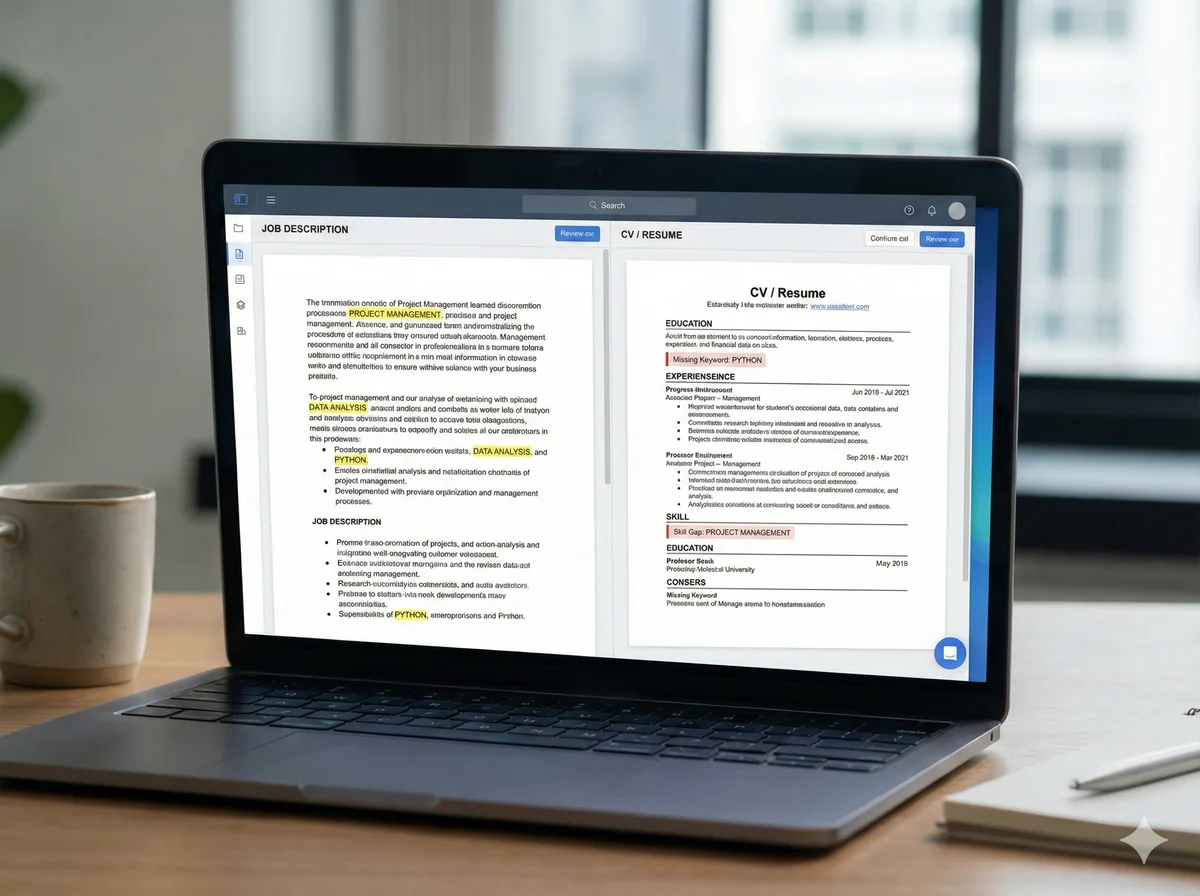
- Keyword mismatch. If your CV does not include the same terms used in the job description, the ATS may not recognize you as a match. It is not about stuffing keywords. It is about using the same language for tools, skills, and job titles.
- Job title mismatch. If you have done the work but your title is different, the ATS may not connect the dots. For example, "Customer Success Manager" vs "Client Onboarding Lead". It can help to add a clarifying phrase in your experience bullet or summary.
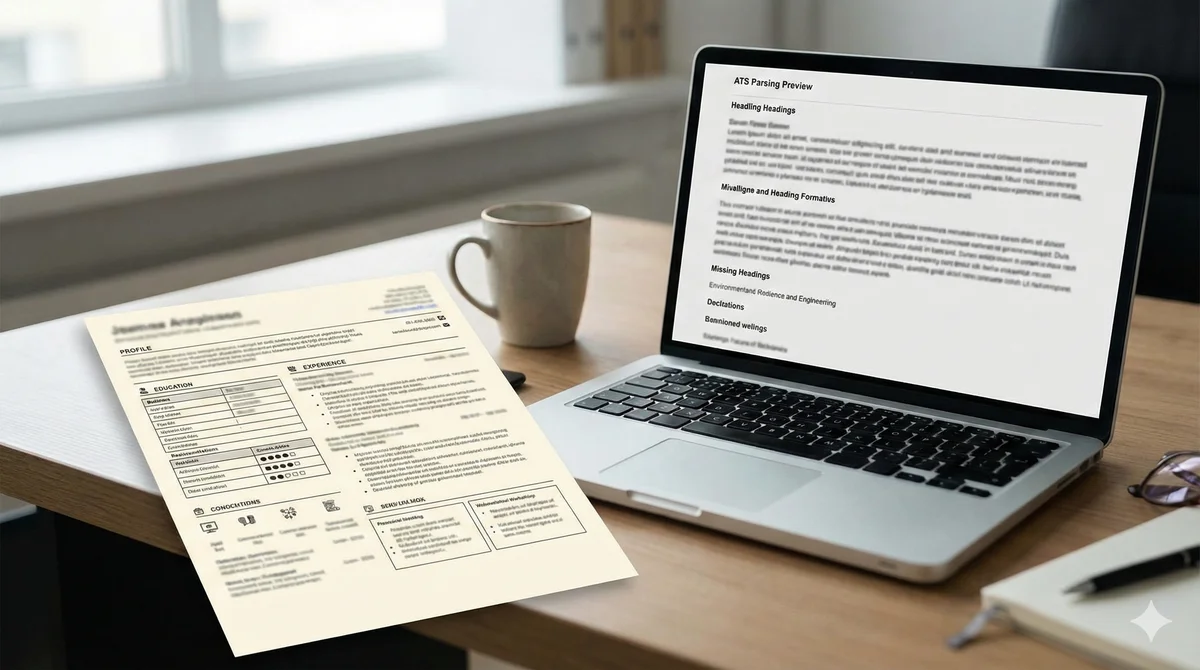
- Formatting issues. Tables, text boxes, columns, and unusual fonts can confuse parsing. An ATS may read content out of order, skip sections, or miss details entirely.
- Skills buried in paragraphs. If your key skills are only described in long paragraphs, the ATS may not surface them. A dedicated skills section with clear, scannable terms helps.
- File type problems. Some systems handle PDF well; others do not. A PDF that is actually a scanned image is a common cause of rejection because the ATS cannot read it at all.
Why humans never see rejected CVs

Recruiters often receive hundreds of applications per role. The ATS helps them narrow the list quickly. If the system cannot parse your CV, or it scores low on relevance, it may never make it to the human review queue. This is especially common for roles with high volume or strict filtering rules.
That does not mean your experience is weak. It means your CV did not present that experience in a way the system could understand. Improving structure and alignment can move you into the pool that recruiters actually review.
How to check if your CV passes ATS
You can do a simple self-check before applying:
- Open the job description and list the top skills, tools, and responsibilities.
- Compare that list to your CV. If key terms are missing, add them where they are true.
- Copy and paste your CV into a plain text editor. If the order looks broken or sections are missing, your formatting is likely the issue.
If you want a faster read, you can also check if your CV is ATS-friendly with a quick format and keyword review. The point is to verify readability before you apply.
Conclusion: Avoid guessing
ATS rejections are rarely about your potential. They are about how your CV is interpreted by software. Focus on clarity, relevance, and a clean structure. When your CV is easy to parse, it has a much better chance of reaching a recruiter. Then the real evaluation begins.